
Kodungallur Bharani: Kerala’s Fierce Goddess Festival
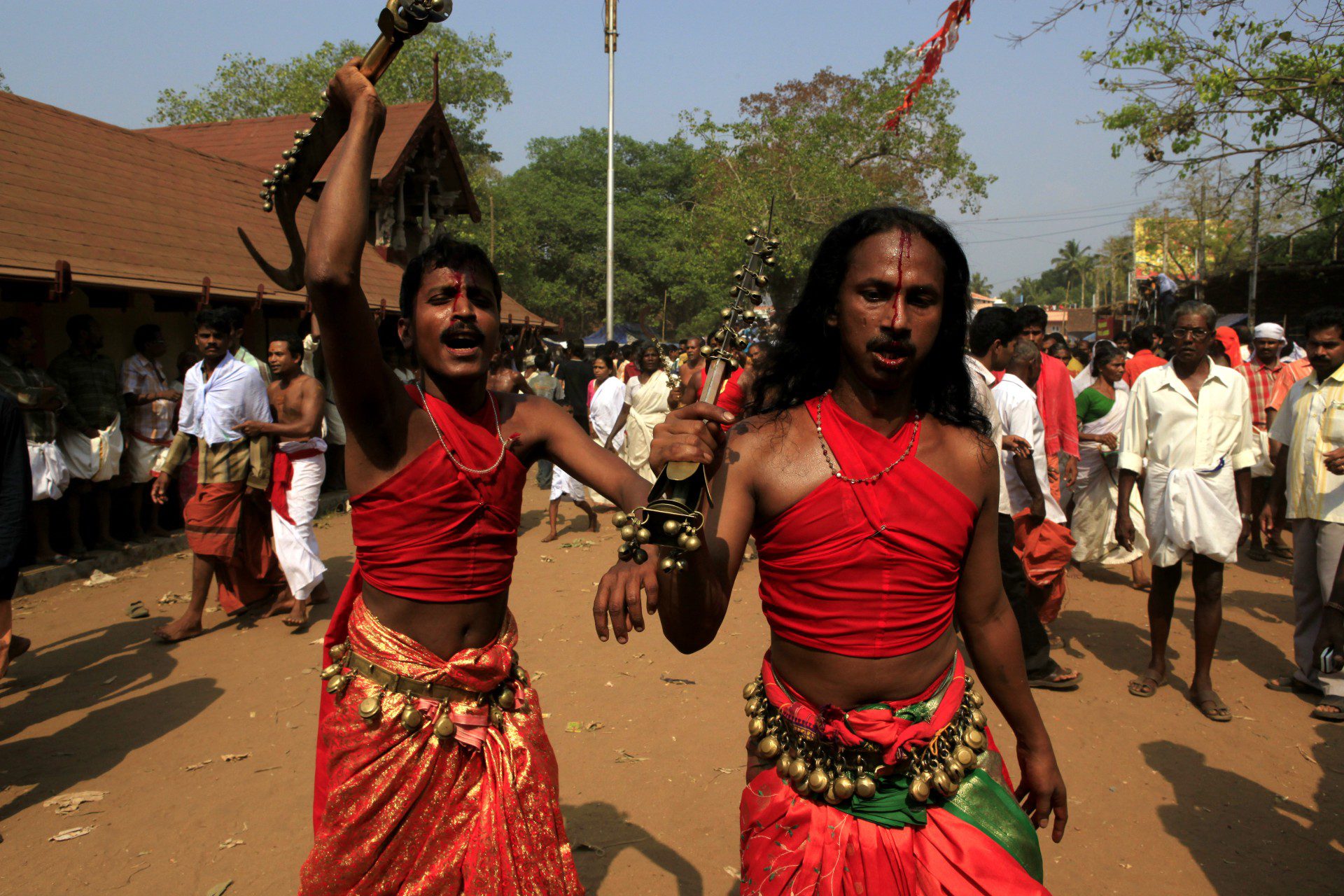
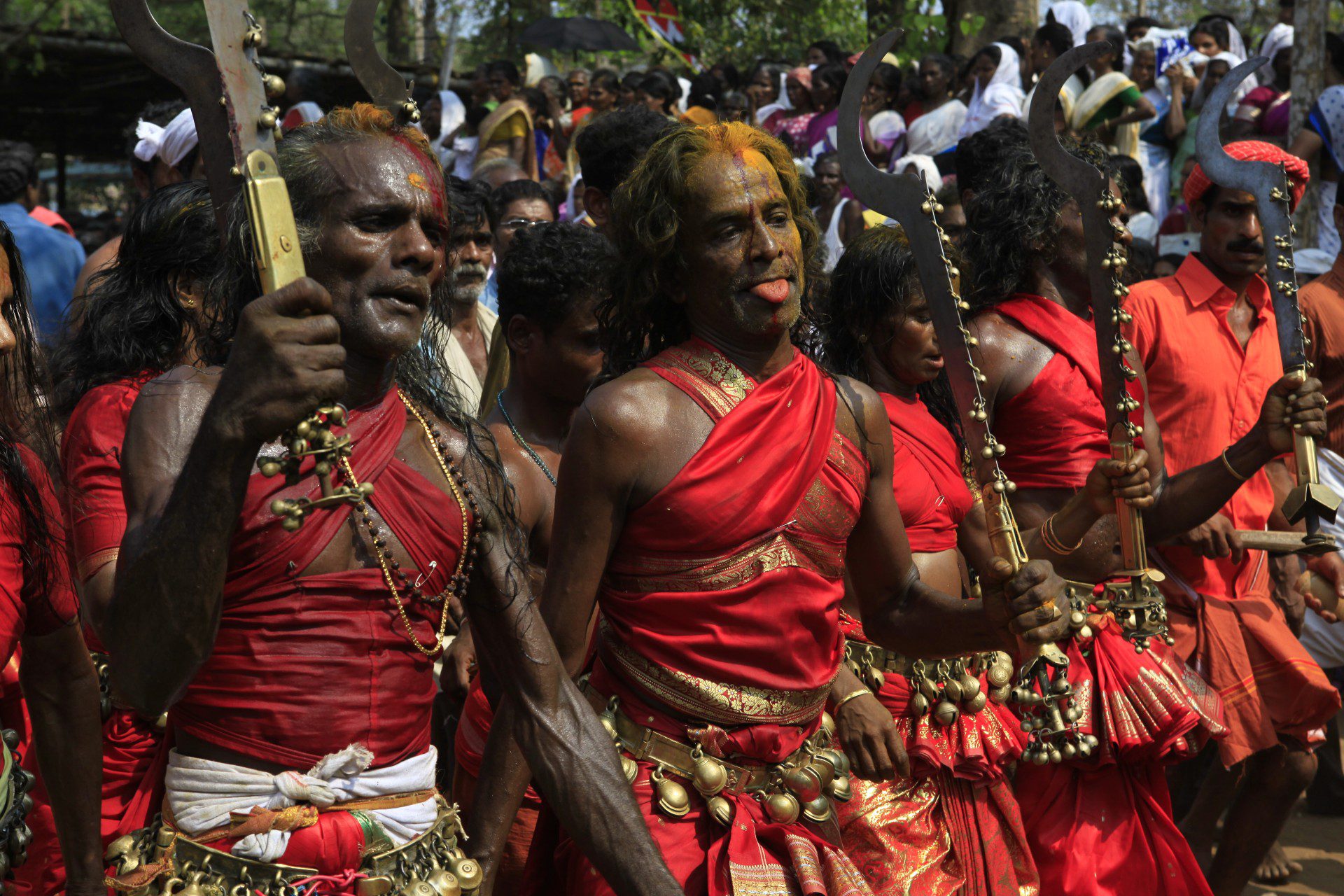
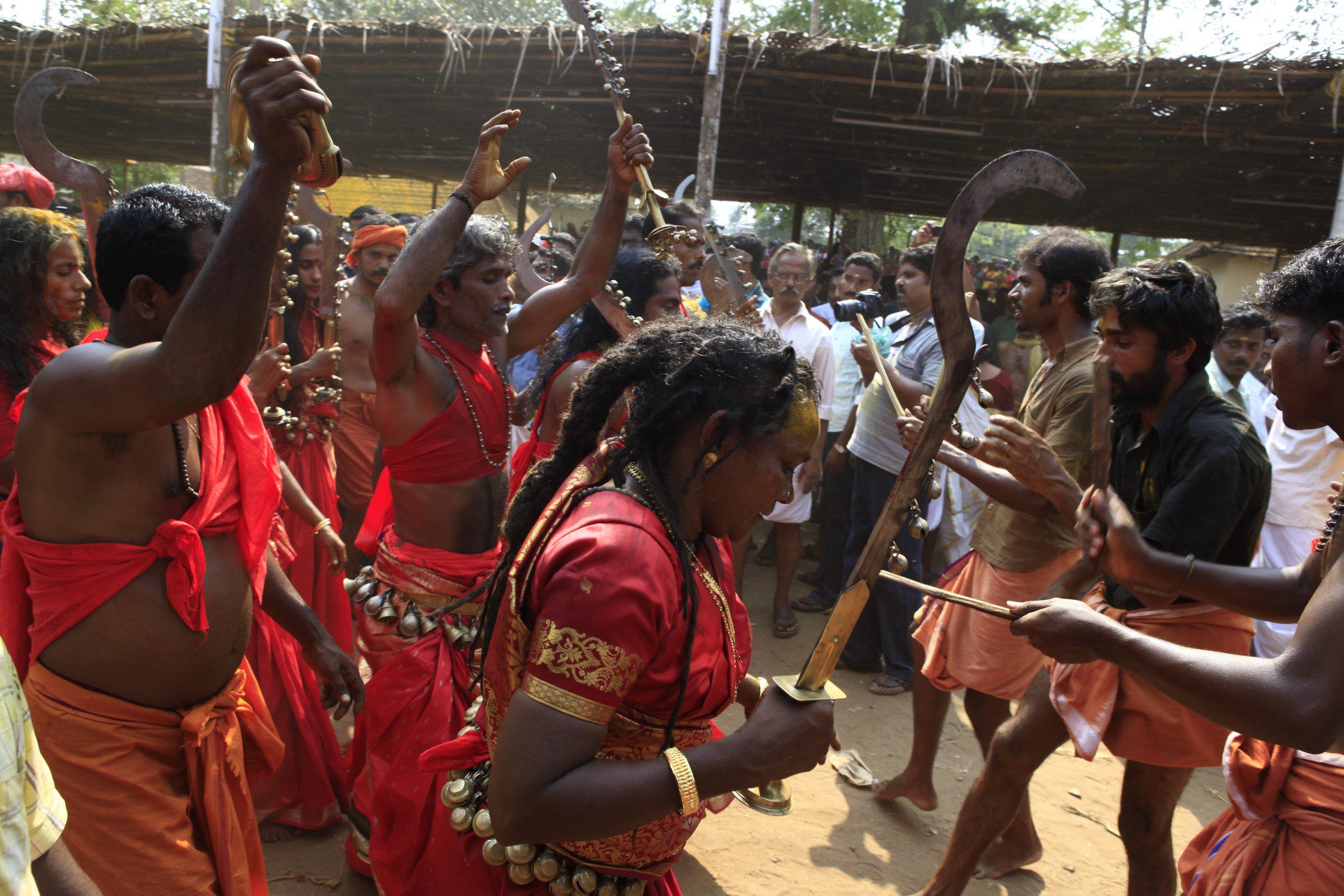
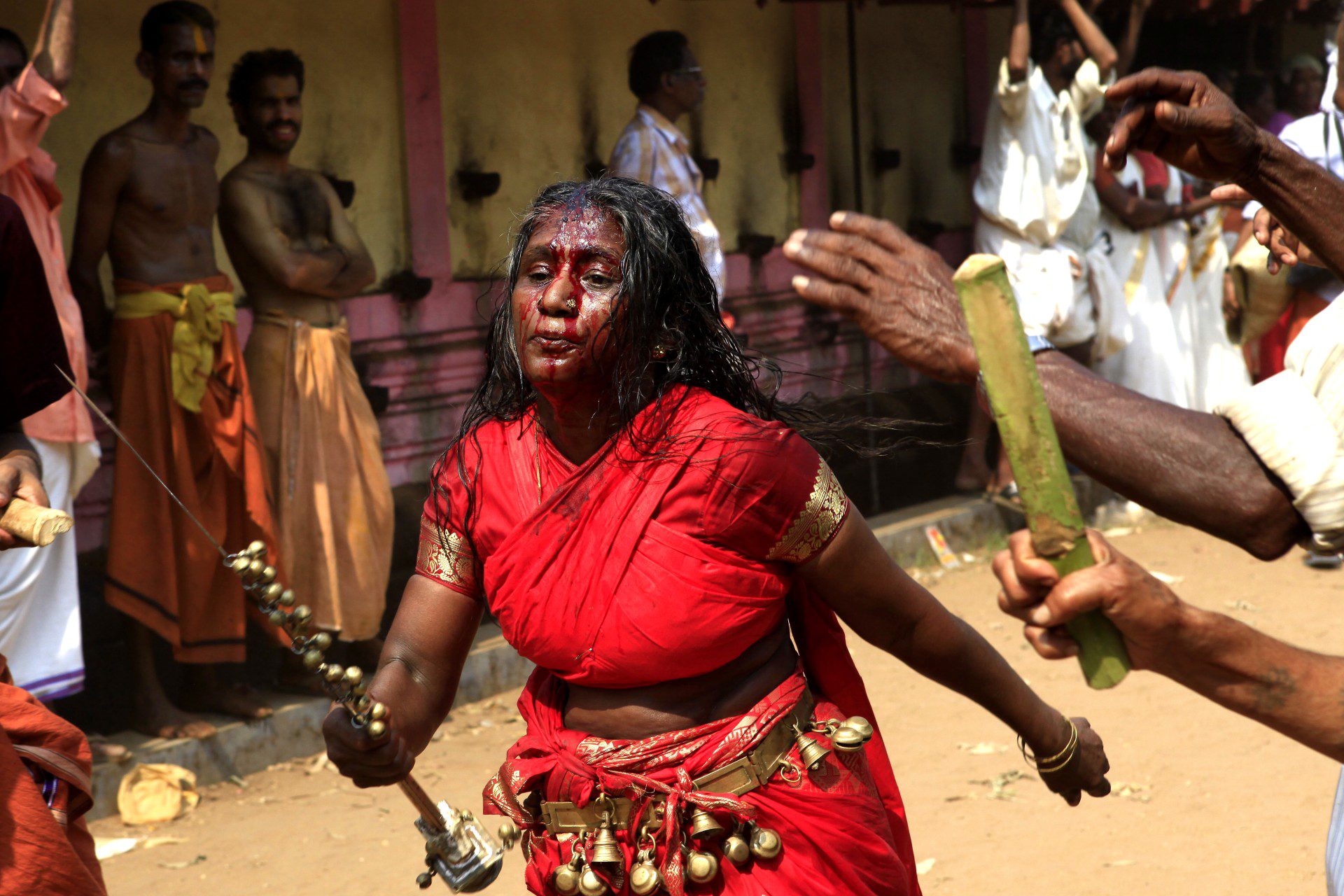
Kodungallur Bharani erupts at the Kurumba Bhagavathy Temple in Thrissur district as a raw, trance-filled homage to Bhadrakali, defying temple norms with rooster sacrifices and oracle dances during March-April. This month-long event, rooted in ancient Chera-era port traditions, breaks Brahminical purity rules through deliberate “pollution” rituals, empowering lower-caste devotees in a cathartic surrender to the fierce mother goddess. Oracles in red robes whirl ecstatically, smearing sacred spaces amid libelous folk songs that invoke her demon-slaying wrath.
Ritual Intensity
Festivities ignite with Kozhikkallu Moodal, where cocks from historic families like Tatcholi Othenan’s are sacrificed on roadside stones, their blood marking devotion. Kaavutheendal peaks as velichappads—trance-channeling oracles of both genders—brandish swords, strike temple rafters, hurl turmeric and coconuts, and chant Bharanipattu ballads abusing the deity to provoke her blessings. The temple shuts for purification after this frenzy, reopening with Chandanapoti Charthal sandalwood smearing.
Cultural Defiance
Bharani embodies subaltern resistance, with Pulaya and Araya communities reclaiming sacred space from elite control via Muchchilatt songs’ explicit verses and chaotic energy. Linked to Kodungallur’s role as a pre-Christian trade hub, it honors Kali as death’s ruler on Bharani asterisms. Unlike sanitized rituals, this festival thrives on taboo-breaking fervor, drawing thousands for its unfiltered spiritual release.